BCI-RPG, ClimbHigh.AI, Intersection of Educational AI, Brain-Computer Interfaces, and Adaptive Learning
Original publication Date: November 11, 2025 Author: Hawke Robinson
How Does Educational AI Platform Development Relate to Brain-Computer Interface Research?
ClimbHigh.AI (where I serve as CITO and Co-founder), announced in November 2025 our Series A funding pursuit ($30M) for educational technology platforms using AI and community enhancements to reduce content creation costs and enable adaptive learning. The ClimbHigh.AI Platform is built based on 8+ years of lessons-learned from Practicing Musician SPC's founder developing their music education platform, plus my own 25+ years as a teacher and learning management systems developer, 40+ years in technology development overall, 20+ years cognitive neuropsychology of learning, research psychology, neuroscience, and recreational therapy background.
For those following my BCI RPG (Brain-Computer Interface Role-Playing Game) project research and development, the ClimbHigh.AI, BCI-RPG, and NeuroRPG.com endeavors have overlap at the intersection of AI, neurotechnology, accessibility, and educational applications.
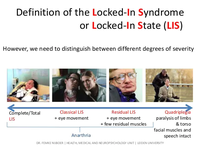
The same AI and machine learning technologies we've developed for educational content creation and adaptive learning systems can also integrate with brain-computer interfaces for users with severe disabilities, especially Locked-In-State / Complete Locked-In Syndrome (LIS / CLIS), who need alternative input/output modalities for education and critical human social connection with others.
AI in Educational Technology: Current Applications
The ClimbHigh.AI platform uses machine learning for several purposes:
- Content Creation Automation: Reducing educational video production from $1,500 to $5 per video (targeting $0.50 at scale) through our existing optimization, automated editing, coordination, and integration.
- Adaptive Learning Pathways: Our system dynamically analyzes the learner's progress and automatically adjusts educational content delivery, difficulty, and sequencing based on demonstrated skill development (not just time spent), learning styles, and other metrics.
- Automated Feedback Generation: The system, can provide initial assessment and feedback on learner practice sessions using ML-powered analysis of audio/video recordings.
- Natural Language Processing: Processing learner questions and providing relevant educational resources and explanations.
These AI applications currently work with standard input methods (keyboard, mouse, touch, video, audio). But the architectural decisions I have made also allow extending interaction with the the platform that can be integrated with Brain Computer Interface (BCI) technologies as alternative input/output modality to further improve accessibility for all.
Neurotechnology Integration Possibilities
For users with severe motor disabilities (ALS, locked-in syndrome, muscular dystrophy (MD), spinal cord injury, some types of brain injuries etc.), brain-computer interfaces offer potential for accessing educational content and social connection, enabling demonstration of learning when traditional interaction methods aren't viable.
Potential BCI integration with educational AI platforms:
- BCI as Input Method: Users controlling educational platform navigation, content selection, and response input through BCI rather than keyboard/mouse/touch. This requires platform architecture that doesn't assume specific input modalities. I am a huge advocate for accessibility, and making sure that our architectural decisions make it much easier to integrate BCI technologies with our platforms.
- BCI + AI for Adaptive Assessment: Combining BCI-recorded brain activity patterns with AI-powered learning analytics to assess comprehension and cognitive load, adjusting educational content accordingly. Right now this is still at the research-stage, not production-ready yet, but architecturally viable.
- Neurofeedback-Enhanced Learning: Using BCI to provide real-time feedback about attention, cognitive load, and engagement during educational activities. This enables learners to develop better metacognitive awareness and self-regulation strategies.
- Multimodal Learning with BCI: Combining traditional educational content delivery with BCI-recorded neural responses to optimize learning pathways based on individual neurological responses, not just behavioral performance.
These are just a few of the many possibilities, for our accessibility-enhanced product features. Building educational AI platforms with open standards and extensible modular accessibility-enabled/supportive architecture matters for whether BCI integration is feasible. I "begin with the end in mind" (Covey) designing to have improved accessibility early-on, rather than a bolt-on-later approach.
Ethical Considerations: AI, Neurotechnology, and Education
Combining AI, neurotechnology, and education raises ethical questions that need consideration:
- Data Privacy: Brain activity data is arguably more sensitive than behavioral data. Educational platforms collecting neural data need robust privacy protections beyond typical educational data safeguards. As the host of "Tech Talk With Hawke - Discussion of the impact of technologies on the security, rights, and privacy of people" Talk Show and Blog, I have always been a strong and outspoken advocate for protecting users. I am often contracted as an Ethical Development consultant for many projects.
- Cognitive Liberty: Students should have genuine choice about whether to use BCI-enhanced educational tools, not face pressure from institutions to adopt neurotechnology for assessment or content delivery. They should have full transparency and control of how their data is handled and who has access to it. I have often performed HIPAA, SOX, and other audits over the decades, and I'm a strong advocate for 100% user-control of user data, such as my LibreVitals.com endeavor to help you have 100% full control of your health tracking devices data.
- Accessibility: BCI technology can be expensive and may not be readily available to all learners. As I have done at RpgResearch.com, Rpg.LLC, to lower the barriers to entry (including financial barriers), so to have I endeavored to do so with BciRpg.com, NeuroRpg.com, and planned as part of the ClimbHigh.Ai Platform development.
- Interpretability: AI systems making educational decisions based on neural data need to be interpretable by educators and learners, not black-box systems where no one understands why certain educational pathways are recommended. I have been a very actively engaged open source advocate for decades, and contributed countless open source projects. While personal data is completely protected, every effort is made to provide full transparency at all levels (where legally and ethically appropriate).
- Purpose Limitation: Neural data collected for educational purposes shouldn't be repurposed for other applications (employment screening, insurance underwriting, etc.) without explicit consent, all such data is handled very carefully and ethically. We keep the most critical private data on-prem, on our own servers, only using the (multi-)cloud for non-data-sensitive scaling capabilities, and we do not distribute your data outside of our ecosystem without your explicit permission (for example if you want to export your data to another platform, or integrate through our Single Sign On (SSO) our platform with your school's LMS), at a very granular level.
- Strong Ownership Accountability: ClimbHigh.AI's approach includes strong structural protections: end-to-end encryption where users control the keys, no data monetization business model, no advertising-based revenue model, strong creator ownership model providing governance rights over data policies, blockchain and db systems dedicated to keeping careful and transparent track of ownership of contributions and usage. But these protections need ongoing vigilance to maintain under business pressure.
Current BCI RPG Research Status
The BCI RPG project (a personal passion-project completely separate from ClimbHigh.AI) continues research on using brain-computer interfaces to enable people with severe disabilities to participate in cooperative social role-playing games and all of the benefits that RpgResearch.com and RpgTherapeutics.com have found from engaging in these complex recreational activities.
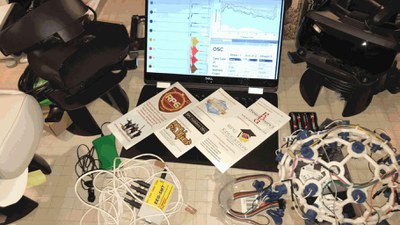
Current status:
Hardware: Working with non-invasive EEG-based BCI systems (OpenBCI, Emotiv, Muse, NeuroSky) for research.
Software: Custom software for translating BCI signals into game actions. Lots of calibration required per user.
Participants: A number of research participants with various disabilities testing BCI RPG systems.
Efficacy Research & Evidence-in-Practice: Over years of research and community programs through RpgResearch.com, and evidence-in-practice through my private practice, at RPG Therapeutics LLC, for over a decade as a Washington State Department of Health Registered Recreational Therapists, the results are VERY promising.
Limitations: Current systems are slow (compared to standard input methods), can require significant setup and calibration, and work better for some users than others. I'm making every effort to improve this experience as much as possible, and significant progres is being made every year.
The BCI RPG research is focused on game and Recreational Therapy goals, but these all strong inform thinking about accessibility requirements for educational platforms as well.
Funding Directly Impacts Ability to Implement
If Series A funding of ClimbHigh.AI succeeds:
- ClimbHigh.AI platform development continues regardless, but funding will exponentially accelerate our ability to scale (for example we have partnerships that already have a wait-list of over 3 million students by Summer 2026 through the America250.org Project, and another 1+ million from the YMCA throughout 2026-2027.)
- Patent-pending AI-powered educational tools mature
- Patent-pending community content contribution and peer review system scales
- Accessibility features integration accelerates (keyboard navigation, screen readers, alternative inputs such as BCI, and much more)
What This Means for BCI Research Community
For those following BCI research and neurotechnology development:
The ClimbHigh.AI platform development represents one instance of educational AI architecture that's being built with extensibility and accessibility in mind. Whether it actually integrates with BCI systems depends how our funding goes.
For those interested in much more detailed information, please see:
- ClimbHigh.AI: https://climbhigh.ai
- Practicing Musician Social Purpose Company (PM SPC): https://practicingmusician.com
- BCI RPG: https://www.bcirpg.com
- NeuroRPG: https://www.neurorpg.com
- RPG Research 501(c)3 non-profit: https://www.rpgresearch.com
- RPG Therapeutics LLC: https://www.rpg.llc
- RPG Education: https://www.rpgeducation.com
About the Author
Hawke Robinson is founder of the Brain-Computer Interface Role-Playing Game (BCI RPG) research project and NeuroRPG.com, exploring applications of non-invasive brain-computer interfaces for people with severe disabilities. He serves as Co-Founder & CITO of ClimbHigh.AI, Fractional CITO of Practicing Musician Social Purpose Company, Founder of RPG Therapeutics LLC, Founder and Executive Director of the 501(c)3 non-profit RPG Research, bringing 40+ years overall technology experience with 25+ years technology leadership, 25+ years education experience, and 20+ years healthcare experience in Nursing, Habilitation Therapy, & Recreational Therapy, including work with populations using assistive technologies.
Background spans neuroscience, cognitive neuropsychology, research psychology, computer science, and recreational therapy. WA State Registered Recreational Therapist specializing in adaptive equipment design and implementation. Creator of the wheelchair-accessible RPG Mobile Fleet and accessibility-focused technology solutions.
Track record includes building automatic speech recognition (ASR) natural language processing (NLP) systems, scaling real-time live audio/video/closed-caption accessibility-enabled learning management platforms to 60,000+ concurrent users, and extensive experience with healthcare information systems, adaptive technologies, and neurotechnology research.